
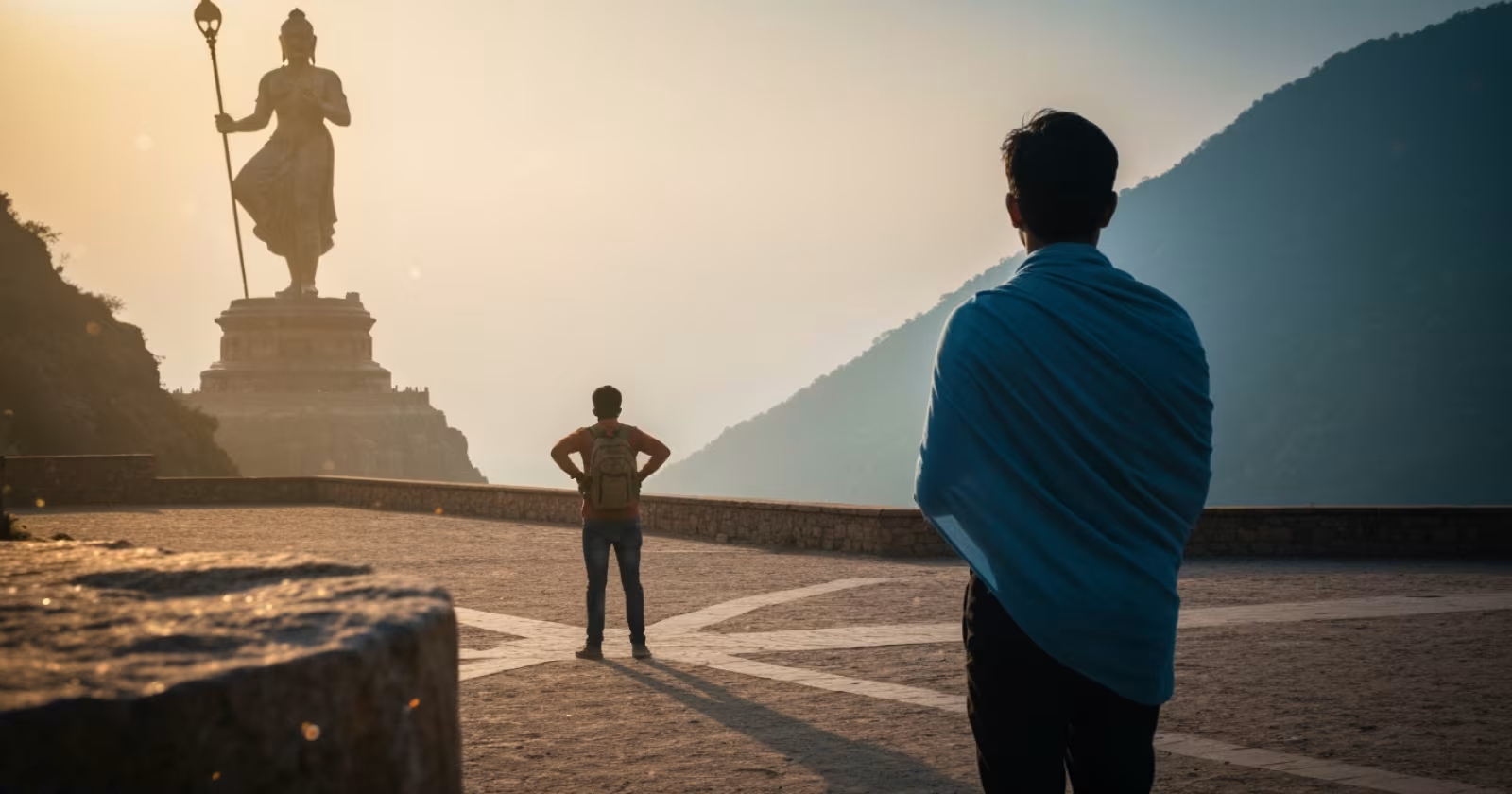
Most people visit the Statue of Unity without once checking whether the season they chose was working for or against them. I made that mistake on my first trip — arrived in April, stood in a queue under 41°C heat, and watched the valley shimmer in a haze that turned the horizon into a blurry watercolor painting.
The Statue of Unity at Kevadia, Gujarat, stands 182 meters tall and draws over 3 million visitors a year. But the experience you get in December and the experience you get in May are so different that they might as well be two separate destinations. Here is what I have learned across multiple visits, and what the travel blogs rarely tell you upfront.
Quick Answer: Winter Wins for Most Visitors
For the majority of travelers, October through February is the best time to visit the Statue of Unity. Temperatures stay between 15°C and 30°C, the Narmada valley is green, crowds are manageable on weekdays, and nearly all outdoor attractions — including the Valley of Flowers, Jungle Safari, and Cactus Garden — are fully accessible. Summer visits between March and June are possible but physically demanding, with temperatures regularly crossing 40°C.
- Height: 182 meters (world’s tallest statue)
- Location: Ekta Nagar (Kevadia), Narmada District, Gujarat
- Entry ticket: Rs. 150 (adults), viewing gallery: Rs. 350 extra
- Open: Tuesday to Sunday, 8 AM to 6 PM (closed Mondays)
- Best months: October, November, December, January
- Nearest airport: Vadodara (90 km), Ahmedabad (200 km)
- Peak season crowds: November to January, especially weekends
- Summer average temperature: 38°C to 43°C (March to June)
What Winter Actually Feels Like at Kevadia
I visited in late November, and the difference compared to my April trip was striking. The Narmada riverbanks were lush, the sky was clear enough to see the statue from the boat cruise without squinting, and the evening laser light show — which runs at 7:30 PM — was genuinely atmospheric with cool air around you.
Winter mornings at the base of the statue are particularly rewarding. The mist over the Sardar Sarovar Dam lifts slowly, and the entire landscape has a quiet grandeur that summer simply cannot replicate. Outdoor zones like the Maze Garden, Butterfly Garden, and the Valley of Flowers are all at peak beauty between October and February. I spent nearly six hours exploring the complex without feeling exhausted — something that would be impossible in May.
The one real downside of winter is weekend crowds. December and January, especially around Republic Day and school holidays, draw enormous footfall. Tickets to the viewing gallery sometimes sell out by 10 AM if you have not pre-booked online.
What Summer Is Really Like — No Sugarcoating
Summer at the Statue of Unity is genuinely harsh. Gujarat’s Narmada belt hits peak temperatures between April and June, and standing at the monument’s base in direct sun at midday is uncomfortable even for seasoned travelers. The Valley of Flowers loses most of its color, and the jungle safari area feels parched rather than scenic.
That said, summer does have specific advantages that winter visitors miss entirely. Hotel rates in Kevadia drop by 30–50 percent. The complex is far less crowded on weekdays, meaning you can walk straight to the viewing gallery elevator without a long wait. I once had an almost private viewing gallery experience in early June — something impossible to imagine in December.
If you are visiting specifically for the Sardar Sarovar Dam and the hydroelectric infrastructure tour, summer is actually manageable since those are indoor and semi-indoor experiences. Early morning arrivals before 9 AM make a summer visit tolerable, but you need to be honest with yourself about heat tolerance.
Season-by-Season Comparison at a Glance
| Factor | Winter (Oct–Feb) | Summer (Mar–Jun) | Monsoon (Jul–Sep) |
|---|---|---|---|
| Temperature | 15°C – 30°C | 35°C – 43°C | 28°C – 35°C |
| Outdoor attractions | Fully accessible | Partially enjoyable | Partially closed |
| Hotel rates | High (peak season) | Low (30–50% off) | Moderate |
| Crowd levels | High (especially weekends) | Low to moderate | Low |
| Valley of Flowers | Peak bloom | Dry, less scenic | Recovering |
| Boat cruise visibility | Excellent | Hazy, less pleasant | Limited/suspended |
| Overall recommendation | Best for most visitors | Budget travelers only | Adventure seekers |
What Most Visitors Get Wrong About Timing
The biggest mistake I see repeated is booking a weekend in December without pre-purchasing tickets. The Statue of Unity viewing gallery has limited elevator capacity, and by 10 AM on a Saturday in peak season, walk-in slots are essentially gone. Always book online via the official Statue of Unity portal at least 48–72 hours in advance during winter months.
The second mistake is treating this as a half-day stop. Most first-time visitors allocate three to four hours and then regret missing the jungle safari, the children’s nutrition park, or the evening laser show. Budget a full day — arrive by 8 AM, plan your zones, and stay for the 7:30 PM show if you can.
Practical Tips Before You Go
- Pre-book viewing gallery tickets online — walk-ins are unreliable in peak winter season.
- Carry cash for smaller stalls and food counters inside the complex.
- Wear comfortable walking shoes — the complex spans several kilometers of outdoor paths.
- For summer visits, arrive strictly before 9 AM and carry 2–3 liters of water per person.
- Stay overnight in Kevadia or Ekta Nagar to catch both the early morning mist and the evening light show.
- Monday closures are firm — plan your travel days around Tuesday–Sunday availability.
- The Sardar Sarovar Dam viewpoint is most photogenic in winter morning light between 7–9 AM.
After visiting the Statue of Unity across different seasons, my honest recommendation is this: go in November or early December, book your tickets in advance, stay at least one night nearby, and plan your day from morning to the laser show. If your only option is a summer visit, go early in the morning, skip midday outdoor zones entirely, and use the savings on a better hotel. Either way, this is one landmark in India that genuinely justifies the journey — just make sure the season is working with you, not against you. Book your tickets today and plan smarter than I did on that scorching April afternoon.