
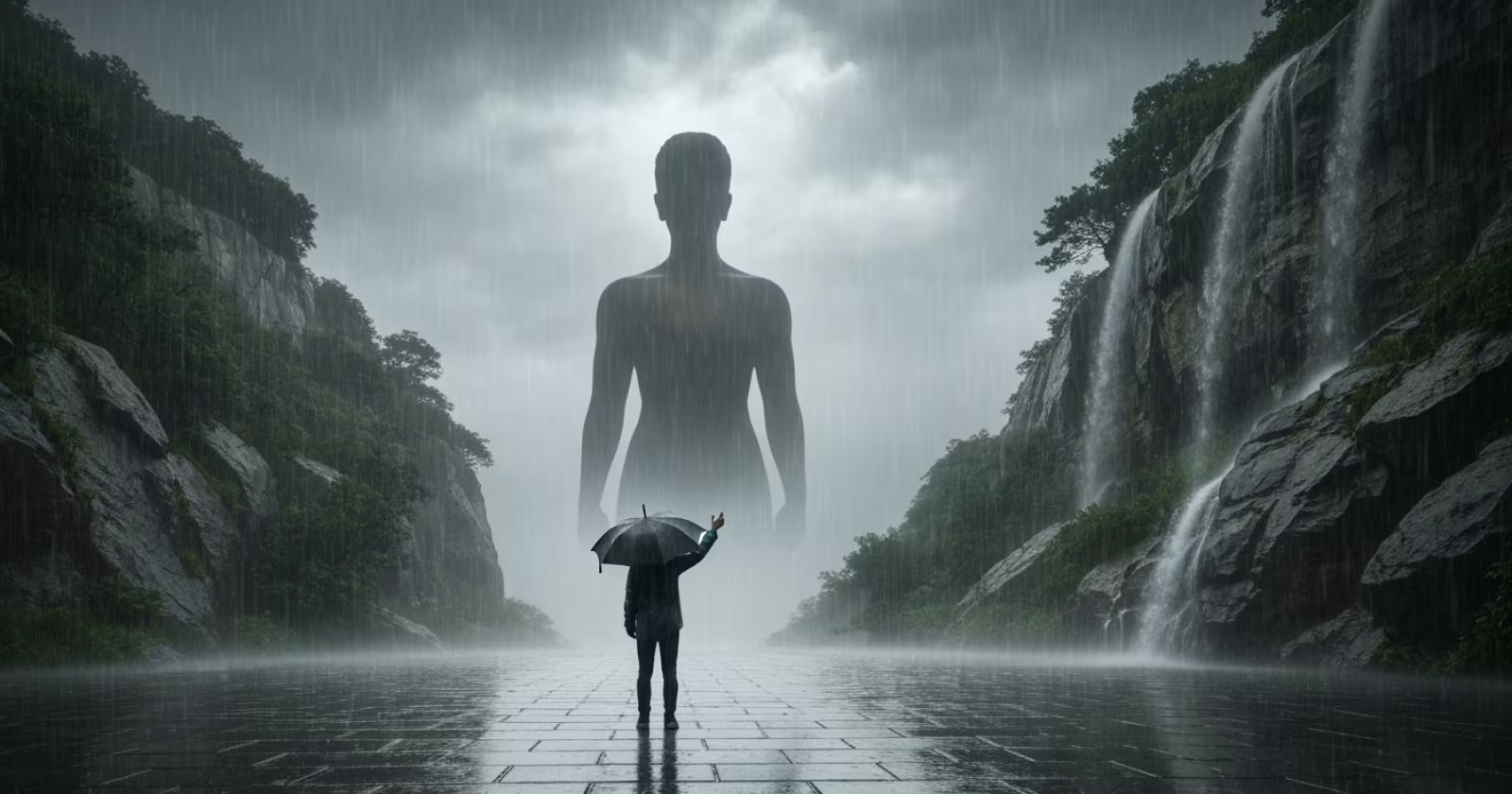
The Sardar Sarovar Dam overflows, the Narmada River turns a thunderous bronze, and the world’s tallest statue stands wrapped in low-hanging clouds — this is the Statue of Unity during monsoon, and it looks nothing like the photos most people have saved on their phones. Visiting Ekta Nagar between July and September 2026 is either the most dramatic travel decision you make all year, or a soggy disappointment depending entirely on what you know before you go.
Most tourists flock here in winter, so the monsoon version of this destination feels almost like a secret. The crowds thin out, the surrounding hills turn an impossible shade of green, and the valley below the dam transforms into something that genuinely earns the word breathtaking. But the tradeoffs are real, and they are worth understanding clearly before you book anything.
Quick Answer: Visiting the Statue of Unity during monsoon 2026 is worth it for scenic beauty and fewer crowds, but the Valley of Flowers, Jungle Safari, and viewing gallery access may be restricted or temporarily closed during heavy rainfall. Ticket prices remain the same — general entry starts at ₹150 for adults — and the best window is early morning on days with light to moderate rain, not during active downpours.
- Location: Kevadia (Ekta Nagar), Narmada district, Gujarat
- Monsoon season: June to September, peak July–August
- General entry ticket: ₹150 per adult (Indian nationals)
- Viewing gallery ticket: ₹380 per adult (subject to weather closure)
- Open days: Tuesday to Sunday (closed on Mondays)
- Best time to visit in monsoon: 8 AM to 11 AM on clear-ish mornings
- Nearest airport: Vadodara (90 km away)
- Monsoon crowd level: 40–50% lower than peak winter season
What the Statue of Unity Looks Like in Monsoon
The transformation this place undergoes during the rainy season is genuinely hard to overstate. The dry, rocky terrain around the base of the statue fills with waterfalls, and the Sardar Sarovar Dam occasionally releases water, creating a visual spectacle that draws photographers from across India. I have seen winter visits here described as grand, but the monsoon version carries an atmosphere that feels almost cinematic.
The Narmada valley below turns intensely green, and the mist that rolls in during morning hours often partially obscures the statue’s upper half, making it look like it is emerging from clouds. That specific visual is the reason many travel photographers deliberately choose July and August over December. It is a completely different experience — not better or worse, just dramatically different.
Statue of Unity Ticket Prices and Access in 2026
| Attraction | Adult Ticket (Indian) | Child Ticket (Indian) | Monsoon Availability | Notes |
|---|---|---|---|---|
| General Entry + Exhibition | ₹150 | ₹90 | Open (most days) | Base level access, museum included |
| Viewing Gallery (453 m height) | ₹380 | ₹230 | Restricted during heavy rain | May close with little notice |
| Valley of Flowers | ₹75 | ₹40 | Fully open, peak bloom | Best monsoon attraction here |
| Jungle Safari | ₹200 | ₹150 | Partially restricted | Check day-of availability |
| Laser Light Show | ₹80 | ₹50 | Cancelled during rain | Evening shows most affected |
| Seaplane Ride (Ekta Nagar) | ₹4,500+ | Same | Suspended in monsoon | Resumes October onwards |
What Most Visitors Get Wrong About Monsoon Here
The biggest mistake I see travelers make is assuming that a rainy day means a bad day at the Statue of Unity. That thinking is backwards. A light drizzle with clouds rolling over the valley is one of the most photogenic conditions this destination offers. The real problem is arriving on a day of heavy, continuous rainfall, which does close the viewing gallery and can make the outdoor zones unpleasant to navigate.
The second mistake is ignoring the Valley of Flowers during monsoon. This is actually the one attraction that peaks during the rainy season — the blooms are at their fullest between July and September, and most visitors who come in winter have no idea this exists. It is one of the most underrated things to do at Ekta Nagar and it is genuinely stunning in 2026 after expanded planting was completed last year.
A third common error is showing up without a booking. The Statue of Unity uses a timed-entry ticketing system on the official website (soutickets.com), and even during monsoon, weekend slots can fill up faster than expected. Walk-up tickets are sometimes available, but I would not risk it on a Saturday.
Practical Tips for a Monsoon Visit in 2026
- Book tickets online at soutickets.com at least 2–3 days in advance for weekends
- Carry a compact umbrella and waterproof footwear — the walkways get slippery
- Arrive before 9 AM to catch mist-level views of the statue before clouds fully lift
- Check the weather forecast the night before — two clear days after heavy rain offer ideal conditions
- Combine your visit with the Valley of Flowers, which is at peak beauty in this season
- Stay overnight in Ekta Nagar at the Tent City or Shrestha Bharat Bhavan for early morning access
- Do not plan the evening laser show as a fixed activity — it cancels more often than not in July and August
Getting to Ekta Nagar During Monsoon
The road from Vadodara to Kevadia (roughly 90 km) is well-maintained and handles monsoon conditions without major issues in most years. State transport buses run daily, and private cabs from Vadodara are the most convenient option. The nearest railway station is Vadodara Junction, which connects to major Indian cities.
One practical note — some of the smaller approach roads near the dam area can get waterlogged after very heavy overnight rain. Checking local road conditions the morning of your visit is a good habit, especially if you are traveling by two-wheeler or in a low-clearance vehicle.
Is a Monsoon Visit to the Statue of Unity Worth It?
Honestly, yes — but with adjusted expectations. This is not a visit where you experience every attraction at full capacity. The seaplane is grounded, the laser show is unreliable, and the viewing gallery can close without much warning. What you get instead is a version of this destination that very few people have seen — a lush, moody, dramatically green landscape wrapped around one of the most ambitious structures built anywhere in the world in the last decade.
For photographers, nature lovers, and travelers who specifically dislike crowds, monsoon 2026 at the Statue of Unity is an underrated choice. For families with young children or anyone whose priority is accessing every attraction on the list, October to February remains the safer window.
Plan your monsoon visit around a weekday, book tickets the night before on soutickets.com, pack for rain, and prioritize the Valley of Flowers. Do that, and this will be one of the more memorable travel experiences you have in India this year — not despite the rain, but because of it.